Maryland’s Black Owned Business Directory Marketing Solutions.
Source: Presentation ‘Maryland’s Black Owned Business Directory Marketing Solutions.’

Maryland’s Black Owned Business Directory Marketing Solutions.
Source: Presentation ‘Maryland’s Black Owned Business Directory Marketing Solutions.’
A social media campaign can yield positive results for the brand recognition and financial success for a company. However, the engagement of potential and existing customers cannot be measured by likes and reposts alone. Metrics must be used for the tangible measurement of a social media campaign’s success.
The objectives of my media marketing program would be contingent on the needs of the client. The needs of the client are thereby contingent on the purpose of their campaign. What message are they trying to promote? Who are they trying to promote it to? What matters most to the people they are trying to promoting their brand to? Chitwood noted that beyond getting visitors to your brand’s website and then getting them to return, you should clearly define goals for how you want these visitors to convert into sales or other desired actions (2013). Based on the brand’s answers to these questions, we will have a better idea of not just what to say, but how to measure the success/data of what was said.
The processes I would use to monitor ongoing campaign success would involve conveying the brands genuineness and customer service capabilities in its social media interactions. This is done by building the relationship between the brand and the customer by constantly knowing what matters to them by listening to their feedback and fine-tuning online content. The data of the collected metrics will help [the brand] predict purchase intent and craft relevant, impactful campaigns [for the future] (Smith, 2015).
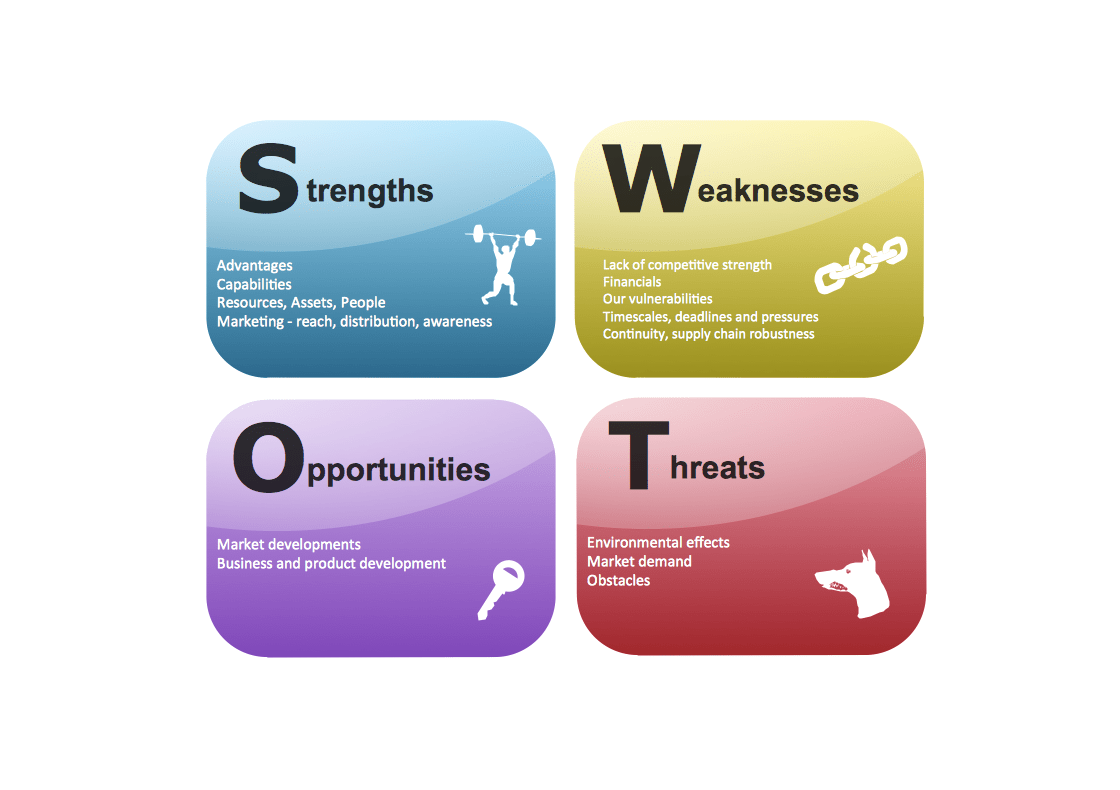
Another strategic process I would also employ would be conducting a SWOT analysis. Manktelow defined A SWOT Analysis as a useful technique for understanding your Strengths and Weaknesses, and for identifying both the Opportunities open to you and the Threats you face (Mindtools.com). Analyzing these factors will direct the execution and success of the social media campaign.
Metrics such as the number of followers and numbers of shares are good, but only have minimal value. Chitwood noted that what should be measured instead is Audience Growth Rate [since it] follows a positive level of growth.[This helps to] ensure that you’re speaking to the right people – and that those people are listening (2013).
Another key metric would be Average Engagement Rate, [which] allows you to check the pulse of your existing network and see how your social media efforts are resonating with this established base. Your average engagement rate compares your posts’ engagement with your overall follower base (Chitwood, 2013). Moreover, metrics such as the amount of leads generated that become converted customers are the most important. When the consumption of branded content causes a potential customer to become an actual customer, it creates revenue, the most important KPI objective of any company.It’s important to know what metrics matter and why. What seems like an important data may not be as relevant once compared with other information. Lee noted that when you see the metric, do you know what you need to do? If you don’t, you’re probably looking at a vanity metric (2014). Joop Rijk provide an insightful infographic which shows what metrics yield results and which do not. Based on this, the focus will remain on data which will lead to the campaign’s success.

My reasons for tracking these specific metrics is about measuring and ensuring both social and monetary success for the brand. In doing so, I can ensure the strategic planning of the social media program will produce measurable outcomes. The tracking of these metrics will generate brand recognition, followers, and most importantly, sales for the brand. These metrics would be collected and measured with a social media metrics platform such as Sprout.
The information of each social media outlet would be displayed through Sprout’s dashboard, allowing the data it to be easily monitored and collected. In conclusion, all social media metrics should be viewed through the lens of your overall business goals. These [metrics should be evaluated] on the basis of how you’re doing in pursuit of those goals, and leverage this information to drive decisions about better positioning your brand in the marketplace (Chitwood, 2013).
References
Chitwood, L. (2013) 5 Social Media Metrics That Your Business Should Be Tracking. Retrieved from http://thenextweb.com/socialmedia/2013/10/29/5-social-media-metrics-business-tracking/
[Image] Rijk, J. (2014).Digital Marketing Metrics That Matter – A Guide to Selecting the Right KPI’s. Retrieved from http://joopcrijk.com/digital-marketing-metrics/
[Image] SWOT Analysis. Retrieved from http://www.conceptdraw.com/samples/management-SWOT
Smith, N (2015).Finally, Put Social Media Metrics to Use. Retrieved from http://www.dmnews.com/direct-line-blog/finally-put-social-media-metrics-to-use/article/412540/
Manktelow,J. (N.D). SWOT Analysis Discover New Opportunities, Manage and Eliminate Threats. Retrieved from http://www.mindtools.com/pages/article/newTMC_05.htm


Ever since the creation of the internet, online privacy has been a highly debated issue. From highly publicized data breaches of major corporations, to the National Security Agency (NSA) collecting data from unsuspecting American citizens, people are concerned about what they post, text, tweet, and save online ending up in the wrong hands.
If I had a brand launching an advertising campaign, I would be as transparent as possible, informing users of what their information would be used for. When it comes to promotions and signing up for various campaigns, the terms and conditions agreement is presented in a way that is considered an inconvenience for most people. While you are forced to scroll all the way to the bottom (with the assumption you have read the text) to acknowledge your agreement to the terms and conditions, the agreement is so long and detailed, people do not read it. I have a simple, but practical suggestion for this which would involve outlining the Terms and Conditions in a video format which would summarize the main points without legalese and jargon, but laymen’s terms. The only commonality it would have with the traditional form is that they must watch the entire video before they are allowed to select the confirmation of entering into the campaign. Considering this, the information would be as brief and easily consumable as possible.
The video would inform the user of the terms and conditions of their privacy, their information we have access to, how we would use it and most importantly, how we would protect it. Moreover, we would emphasize the fact that we would safeguard their phone numbers and emails from being phished by spammers.
The ramifications of companies not following privacy guidelines can not only lead to exposing these facts or cover-ups, but perhaps the diminishment of their customer base due to the distrust and tarnished image created by the company.
Witte noted that individuals unwittingly share data about their Internet usage and the Web sites they view in unlikely ways, sometimes simply by surfing the Internet. Even when we believe we are anonymously visiting Web sites, data mining companies, curious corporations, and the Web sites we visit use tracking methods, cookies, and legal spyware to watch and store information about what we do on the Internet (2014).
Kapko has also noted that it should come as no surprise that the pools of data amassed by Facebook, Google, Twitter and others are being used for financial gain. While these powerful sharing and collaboration tools are free, they do carry a price, and advertising is the currency by which the money flows. [And while the] National Security Agency’s widespread surveillance of online activity has roused the ire of social media firms, it also reveals the extent to which these companies are at least partially to blame (2014).
Another example of compromised privacy includes Lenovo installing Superfish software on its Yoga 2 and Edge 15 models. Unbeknownst to its customers.Lenovo apparently installed the Superfish software, designed to track users’ online sessions including all SSL traffic, making their systems vulnerable to theft from hackers of passwords and other sensitive information. Adding insult to injury, Lenovo took the rather unscrupulous move of installing it at the BIOS level, making it impervious to antimalware and AV protection software.[…] What’s galling about the Lenovo incident is that the company only put a stop to it when Peter Horne, a veteran IT professional in the financial services industry, came across the installation of Superfish in the Lenovo Yoga 2 Notepad he bought [and reported it to] The New York Times (Schwarts, 2015).
The recommendation I would make to a company utilizing tracking advertising would be to choose to be transparent was well. Inform them of your decision to give their information to a third-party, but also give them the choice to opt out of it. But in the end, if a company does not enforce transparency, it may have to come from the government. Witte suggest that Congress should pass a comprehensive privacy statute that provides the appropriate enforcement agencies with the power they need to protect the privacy of the American people [with statutes such as prohibiting] tracking Internet activity through the use of cookies, spyware, and beacons absent clear and meaningful consent from the individual or corporate customer. [Congress could also] mandate clear and meaningful disclosures regarding how and why social networking sites, Web based email providers, search engines, and the other Internet companies with whom we do business, track and store our data before a customer signs up for the services and prohibit any changes to those policies after the customer has entered into a contractual relationship with the company.
In conclusion, people have a right to privacy and should not have their information bought and sold if they don’t wish to. And while many people proactively take care in what they put online, it’s still has the potential to be exploited unless laws are passed to prohibit it.
References
Scwartz, J. (2015). Lenovo Betrayed Customer Trust by Installing Insecure Adware. Retrieved from https://redmondmag.com/blogs/the-schwartz-report/2015/02/lenovo-betrayed-customer-trust.aspx
Witte, D. S. (2014). Privacy Deleted: Is It Too Late To Protect Our Privacy Online?. Journal of Internet Law, 17(7), 1-28. Retrieved from Ebscohost.com.vlib.excelsior.edu
Kapka, M. (2014).Are Social Media Giants Betraying Your Trust? Retrieved from http://www.cio.com/article/2375272/vertical-industries/are-social-media-giants-betraying-your-trust.html
[Infographic] Bailey, R. (2013).Which Internet Companies Protect Your Data from Unwarranted Government Snooping? Retrieved from http://reason.com/blog/2013/05/01/which-internet-companies-protect-your-da

Providing memorable and unique visuals for a brand’s digital marketing can help it to become well regarded. As noted in this module’s notes, posting content on products and services can Builds excitement with community members by providing transparent information of new product/service developments the company is working on and keeps members up-to-date on products changes (BUS 545 Module 4 Notes: Social Media Interaction).
Due to some technical difficulties with the app, I have chosen to research the Vine channel of an already existing brand and have chosen Samsung. As an owner of a Samsung phone and computer, I have enjoyed the functionality and durability of their products. Moreover, my interest in the company was piqued further in selecting them for this assignment.
Samsung currently has three channels on Vine: The Samsung Smart Camera channel, the Samsung Mobile channel, and the Samsung Mobile US channel.For this assignment, I will focus specifically on the Samsung Mobile channel as it contains the most current videos.

Viewing this vine channel, I can see that the purpose of Samsung’s videos is to highlight their newest products in enticing ways. Viewing their vines, one can see that the brand not only has innovative quality products, but a highly developed creativity and sense of humor.
For example, with their newest offering of the Samsung Galaxy S6, one Vine offered a spring-themed play on words. The video showed stop-motion animation of flower petals emanating the product as it charged wirelessly with the tagline: Wireless charging puts the petal to the metal. The visual was organic and beautiful, presenting the product not as a mere phone, but a work of art.
The video resonates with customers by celebrating the current season of spring, which brings to mind flowers in warm weather, making people feel good. But most importantly, the video combined this notion with strategic product placement.
In another video, Samsung partnered with Marvel comics to release a limited edition Iron Man S6 Galaxy phone. They created a stop-motion style Vine showing the unboxing of the product. The phone would whet the appetite of any Marvel/technology connoisseur as it contained sleek shots of the themed box, phone and charger with some super hero-type sound effects against a black background. According to a recent Tech article in Forbe’s magazine, The back of the Galaxy S6 edge Iron Man Limited Edition has Iron Man’s face etched in the center (just like the box it was packaged in). The Galaxy S6 edge Iron Man Limited Edition also has a custom Avengers theme preinstalled. And the wireless charger in the Galaxy S6 edge Iron Man Limited Edition was designed to look like the Arc Reactor [from the comic books](Chowdhry, 2015).

Watching the Vine made me realize that the video offered an adult take on the nostalgic feeling of getting a new toy as a child as most people know how sensory that experience is. The video offered a sensory experience that offered sight and sound in a way that makes you want to experience the most exciting option: touching the phone, further cementing an emotional connection. Strategically enough, the phone was also released to coincide with the latest installment of the Avengers movie series, The Age of Ultron, which came to theaters just this weekend.
Samsung’s vine marketing has really mastered the task of creating videos on this platform. Upon viewing these videos, it is apparent that Samsung has used a variety of strategies noted by Washenko (2015):
The success of Samsung’s strategy can be measured by views and shares, but most importantly, conversions as Samsung’s objective is for Vine viewers to become their consumers. One way to guarantee this is with the inclusion of user generated content. Owners of Samsung products creating content with Samsung phones can show potential customers just how well the products perform.
For example, a user by the name of Pinot has created a number of clever, artistic and very original videos using the Samsung Galaxy as his muse. While doing so comes easily for him due to being artist/animator by occupation, Samsung using his videos to promote their brand is an artistic partnership in itself, resulting in the two entities increasing views on both their pages. But as I mentioned, the quality of the video is a key factor. As potential customers view and share them by revining them, it may play a role in their decision to purchase a Samsung phone.
Another user by the name of Jerome Jarre has also created humorous and unique videos showcasing not only a Samsung phone, but actual people. The fact that he can pack a narrative into such a short video and feature a Samsung product speak highly of his creativity. This is also another marketing tactic noted by Wachenko:
Showing people in your Vines will boost your chances of connecting with a viewer who’s randomly scrolling past. [Showing people being themselves or acting silly] will peak a viewer’s interest (2015) People are paying attention to Jarre’s videos – as you look though Samsung’s vines, you can see that it is the user-generated content which has the highest amount of views. While Samsung created videos and Pinot’s vines views are in the thousands, Jarre’s video views number in the millions.
In conclusion, Newlands noted that Vine has become a popular and extremely effective platform for influencer marketing. Brands are able to build incentives that encourage users to share the content through the ‘re-Vine’ feature, thus continuing the exposure. In sum, this makes Vine an important platform for brands to share their company values, brand identity, and uniquely connect with their users (2015). Samsung has utilized Vine to promote and showcase their product in a unique and effective way, which helps users connect with the brand.
References
Washenko, A. (2015). 6 Good Vine Ideas for Creative Social Media Marketing. Retrieved from http://sproutsocial.com/insights/good-vine-ideas/
Newlands, M. (2015). Top 5 Brands You Should Learn From on Vine. Retrieved from http://www.inc.com/murray-newlands/top-5-brands-you-should-learn-from-on-vine.html
Chowdry, A. (2015). Samsung Announces Galaxy S6 Edge Iron Man Limited Edition Retreived from http://www.forbes.com/sites/amitchowdhry/2015/05/26/samsung-announces-galaxy-s6-edge-iron-man-limited-edition/

Community Building is a crucial tool for the growth and sustainability of a brands online presence. Socialmediawork.com noted that [a brand] providing rich content for [their] visitors is the cornerstone of any online community. [A brand] needs to give people a reason to come back and encourage them to share posts with other people. Everything you post on social media accounts needs to provide value for people and it’s not just a sales funnel for [an] online company. [The] content [added must ] enrich your [customer’s experience with a brand]. For this assignment, I have chosen Amazon.com as my case study.

(Pictured: Amazon’s various services and acquisitions).
Company back ground
Amazon was founded in 1994 by Jeff Bezos. After learning of the potential that e-commerce offered, he left his position as vice-president of a Wall Street investment firm and moved to Seattle. Amazon’s first incarnation involved selling books online from Bezos’ garage in Bellevue, Washington. Due to the large world-wide demand for literature, the low price points for books, along with the huge number of titles available in print, this concept was successful (Wikipedia.com).
According to Wikipedia, while brick and mortar bookstores and mail order catalogs might offer 200,000 titles, an online bookstore could “carry” several times more. [This is due to the fact that Amazon’s business model involved utilizing the warehouses of] the actual product makers/suppliers. Before settling on selling books, Bezos [read] a report about the future of the internet […] [and] web commerce growth. [Based on this report], Bezos created a list of 20 products which could be marketed online, [narrowing] the list to what he felt were the five most promising products which included compact discs, computer hardware, computer software, videos, and books. Due to Bezos seeing the potential in selling these products digitally, Bezos would later acquire and optimize e-commerce software in order to sell these goods. Amazon.com began to offer its best-of-breed e-commerce platform to other retailers and to individual sellers in 2000. Today, hundreds of thousands of world-class retail brands and individual sellers increase their sales and reach new customers by leveraging the power of the Amazon.com e-commerce platform.
Partners work with Amazon Services to power their e-commerce offerings from end-to-end, including technology services, merchandising, customer service, and order fulfillment (Amazon.com, About page). As Amazon has grown to the internet’s largest retailer and has acquired various companies, they have not yet created their own social networking platform. They are, however, quite adept at utilizing various third-party social media platforms. However, for this post, I will focus specifically of Facebook, Twitter, and Pinterest.
Twitter is definitely one of their strongest platforms. With 1.86 million followers, They often post humorous taglines to advertise featured products, and have frequent giveaways. They also ask for follower feedback to have people tell Amazon what they think should be the featured giveaway.


Customer interaction on Twitter has yielded Amazon a great amount of popularity and buzz due to its creativity. In 2014, Amazon launched #AmazonCart, which allows its followers on Twitter to purchase items by responding to tweets and using the hashtag #AmazonCart. [For example, the article author described buying ] a Polaroid digital camera [he] saw advertised on Twitter. [He] replied, “@amazon Love this. So modern yet retro. #AmazonCart.” Less than 15 seconds later, the item was in [his] cart, ready for purchase. This kind of innovation is what makes Amazon stand out above other online retailers (Schroder, 2014).

Miley noted that when [Facebook] has somebody who has a question or is expressing their frustration with the company, [Amazon] quickly responds with an answer or some other dialogue to help that specific situation, [creating a direct exchange with the customer] (2014).

Amazon is also adept at initiating simple call to action. One way they did it was by [tapping] into [their] followers’ needs [by encouraging] them to submit something on their wish list[during the holiday season]. In doing so, it helps customers get excited about [their products]. Amazon offered a chance to win a $500 gift card for fans who included the wish list hashtag in their comment (Hemley, 2014).
Amazon has leveraged the visual appeal of Pinterest by simply pinning pictures of popular products for people to buy. The brand has dozens of picture categories based on customer’s interest such as Pets, Living & Home decor, Heal& Fitness and, of course, its most-pinned category, Fashion. Miley noted, keeping pictures vibrant [and appealing] is what attracts people to those Amazon products on Pinterest (2014).The descriptions in the captions are minimal as the main attraction is the product pictures. The reasons behind Amazon utilizing these social media platforms are for the goal of customer engagement and retention through Social Customer Relationship Management. (SCRM). As this was the topic in this week’s M3 discussion, I noted that while CRM is about building and maintaining relationships, the Social element of CRM does that with the added factor of offering incentives and personalized messages via social media platforms. Moreover, with traditional CRM the conversation is one-directional from the brand to the customer. But with Social CRM, a personalized exchange occurs between the brand and the customer, resulting in customer satisfaction and loyalty to the brand.

The main factor which has caused Amazon to tailor their strategy in this way is due to they type of sales outlet they are. Since Amazon.com has never been a brick-and-mortar store, they have had to tailor their outreach to serve customers in the online space in ways that customers would not only respond to, but would want to patronize again and again.
According to Chaffey (2014), we can learn from {Amazon’s] approach since they use digital marketing efficiently across all customer communications [through]:
Moreover, the fact that the internet has no borders allows them to reach customers not only in the US, but all over the world, having greater profit-making power.
As Far as recommendations for developing and building more personal relationships with their customers, While many more e-commerce sites have replicated this strategy now, Amazon still serves as the leading source of customer – created unbiased product reviews. To make product reviews more useful to customers, Amazon enabled community moderation by letting customers vote to measure the usefulness and relevance of the reviews. Amazon also enabled discussions that let shoppers ask follow-up questions directly to the reviewer (Amazon.com – A unique approach to social strategy, 2013).
However, social media offering monetization options will change the space drastically. Facebook should complete beta testing of the buy button in order to allow customers the opportunity to purchase Amazon products without even having to leave Facebook, enabling seamless purchasing.
Another recommendation would be for Facebook to leverage customer information to their advantage in a more personalized way. Perhaps Amazon can use information from their customers Facebook pages like their birthdays and hometowns to offer incentives such as birthday discounts and reduced pricing to Amazon-sponsored events in their areas. A customer receiving incentives like this would ensure customer loyalty and make them feel a sense of exclusivity.
In conclusion, brands cannot overlook the potential of engaging with customers via social media platforms. It is an opportunity to add approachability and humor in order to make a brand memorable. Social customer relationship management can provide personable exchanges with customers which will secure loyalty and profitability for years to come.
References
N.A. Amazon.com. (N.D.). Retrieved from https://en.wikipedia.org/wiki/Amazon.com
N.A. About Amazon (N.D.). Retrieved from http://www.amazon.com/Careers-Homepage/b?ie=UTF8&node=239364011
Schroder, P (2014). What can media companies learn from Amazon, top social media sites about social transactions? Retrieved from http://www.inma.org/blogs/marketing/post.cfm/what-can-media-companies-learn-from-amazon-top-social-media-sites-about-social-transactions
Miley, J. (2014) Amazon Knows Why Social Media is Important. Retrieved from http://blog.halfabubbleout.com/blog/bid/384949/Amazon-Knows-Why-Social-Media-is-Important
Hemley, D. (2014) 26 Ways Brands Succeed with Social Marketing. Retrieved from http://www.socialmediaexaminer.com/26-ways-brands-succeed-social-media-marketing/
Chaffey, D. (2014). Amazon Case Study. http://www.smartinsights.com/digital-marketing-strategy/online-business-revenue-models/amazon-case-study/
N.A (2013). Amazon.com – A Unique Approach to Social Strategy. Retrieved from https://entre528.wordpress.com/2013/04/06/amazon-com-a-unique-approach-to-social-strategy
N.A. Guidelines for Building Online Communities.(N.D.). Retrieved from http://www.socialmediaworks.com/news-tools-tips/building-online-communities-social-media-marketing/

The Ice Bucket Challenge brought awareness and humor to Amyotrophic Lateral Sclerosis (ALS) aka Lou Gehrig’s disease, a very serious affliction, in 2014.
According to Netimperative, a digital consulting site, The ‘Ice Bucket challenge’ was started by Pete Frates, a baseball player who was diagnosed with ALS [in 2012]. On 30th July 2014 he challenged several Boston Red Sox players to the ice-bucket treatment to raise money and awareness for the condition […] The challenge works with a participant (either a volunteer or someone who has been challenged) [filming] themselves dumping a bucket of ice water on their head. The [drenched individual] then challenges a friend to do the same in the name of ALS, within 24 hour and/or donate to the cause (Netimperative, 2014).
From a social media marketing standpoint, the Ice Bucket Challenge was successful and easily replicated because of its originality and simplicity. Everyone has to access to water,ice, and a container to pour over themselves. And everyone could nominate a person they knew to carry out the same task . Carson also noted that the Ice Bucket Challenge created a compelling message due to its emotional resonance using humor (2014).Moreover, Carson noted that another element that makes the task relatively simple to complete is the use of mobile phones. As more and more people have the ability to record and edit [and share video] with their phones, that helps turn the call to join into something that sounds feasible for potential participants (2014).
Furthermore, While the call to action moved people to act, another reason the campaign was successful was because They’ve taken a disease which is not at all funny, and they’ve taken a cause that is not at all funny, but they’ve attached it to social behavior that’s hilarious (Carson, 2014). Moreover, the campaign’s play on individual egos turned a negative human trait into a positive social movement by essentially using friendly peer pressure to bring awareness to a serious disease by having people not take themselves too seriously to dump ice water over themselves.

Finally, the fact that the ALS Association did not originally initiate the challenge didn’t hinder its success. Various celebrities participating and nominating each other brought increased publicity and a financial target for their charitable efforts: The ALS Association.
One precaution that ALS organizations had to consider in their strategy was the meaning behind the Ice Bucket Challenge itself. Carson noted that anytime you have a word of mouth marketing campaign where you’re turning over control of the brand message to individuals, you run the risk of losing control of the message. One example of this is the confusion as to whether the participants douse themselves or donate, or douse themselves and donate (2014). But the regardless of that distinction, the popularity of the challenge on multiple social media platforms helped the ALS Association raise over 70 million dollars.
References
N.A (2014. Viral case study: How the ‘Ice Bucket challenge’ raised $15m in 3 weeks. Retrieved from http://www.digitalstrategyconsulting.com/netimperative/news/2014/08/viral_case_study_how_the_ice_bucket_challenge_raised_15m_in_20_days.php
Carson, E. (2014).ALS Ice Bucket Challenge: Why it worked and what social media marketers can learn. Retrieved from http://www.techrepublic.com/article/als-ice-bucket-challenge-why-it-worked-and-what-social-media-marketers-can-learn
Ice Bucket Challenge Infograhic. Retrieved from http://repucom.net/case-study-ice-bucket-challenge

A company I chose with effective social media tactics is Zappos. Examples of their social media strategies can be seen in articles by Ratcliff (2014) and McKay (2012).

Brands providing entertaining video content can provide an outlet for companies to not only build brand recognition, but engage both their potential and current customer base. While television has long been the traditional forum for advertising, our Digital Age has changed the way media is consumed, as smartphones and tablets have become the predominant medium for advertising content. After our Module 4 assignment analyzing Old Spice’s humorous marketing approach, I clicked into Domino’s vlog with much of the same enthusiasm (Note: for this assignment, I will be focusing on Domino’s videos posted within the last 6 months).
Upon viewing the content on Domino’s YouTube channel, it’s easy to see that it serves an more of an educational purpose asit highlights some advertisements and give customers a behind-the-scenes look at the inner workings of the Domino’s corporation. Videos about the corporate culture of the company and the Leadership Development program places Domino’s in a positive light. However, as various employees discuss their pride and enthusiasm in working at the corporate headquarters, it left me with many questions about those actually working the front lines of their 4,690 US locations. To answer this, I looked to their video titled: A Taste of Life in a Domino’s Store. While the video was full of youthful enthusiasm, the comments below it told a different story as customers and franchise staff sounded off with various complaints, saying the video was not an accurate representation of working in a typical Domino’s franchise
Fallon (2014) noted that more often than not, a [YouTube] channel with the most-engaged audience is going to perform better than one with the most subscribers and views. Engaged audiences want to feel like the advertiser has [their] best interest in mind and shares the same values. The article also explained that the issue isn’t [always] in the video or delivery, but in what happens next — such as having a poor conversion page.
Upon noticing many negative comments on their Youtube channel, I was surprised to notice no attempt to engage the commenters, which obviously had some strong opinions.
Metrically speaking, I couldn’t help but notice that in the past 6 months, though 11 of their 24 videos got more than 1,000 views, only 2 videos had over 10,000 views: The commercial about the chain dropping the word “Pizza” from its name, and the video highlighting that their pizza can now be ordered on an android watch. Is that it? Come on, Dave!!
But before arriving at a conclusion for a marketing solution, I took a look at Domino’s other social media outlets.
Upon viewing their Facebook account, it’s clear to see their engagement of customers is serious business. As complaints about sub-par pizza, delayed delivery times, and bad customer service was communicated in their timeline, apologies abounded as Domino’s representatives engaged their spurned clientele.

Reps such as Rose, Zach, and Eden asked customers to private message them information about franchise locations and botched orders so they could make things right. They also assisted international customers by referring them to the Facebook page of their respective countries.
Domino’s Twitter account was devoid of deals, but full wry one-liners, enticing pizza pictures, and the occasional advertisement.

Metaphorically speaking, the temperature of their feed was a mere ember, and not a burning flame, leaving much to be desired.
Utilizing my knowledge from my Business Communication class, I took it upon myself to view Domino’s 2014 Annual report, which yielded a promising statistic:
Upon seeing this, I got excited as I flipped through the report in hopes of coming across the initiative taken which created such effective social media marketing, but it was not present. Uupon further research, while the word “digital” is mentioned in the report nearly 20 times. But I was extremely surprised to discover that the words social media, Facebook,or Twitter are not mentioned in the report at all…Come on, Dave!
With Domino’s 2014 revenues totaling nearly 2 Billion dollars, it’s safe to say they have been financially successful. However, customer acquisition and retention is the bloodline of a profitable business and the methods in which those objectives are implemented and reached are worthy of mention.
But I didn’t let myself get a noid annoyed. I came up with some ideas.
Litt stated that in order to gain results [with video content], companies must focus on game-changing, rise-above-the-noise tactics that not only deliver creatively, but also lend themselves to better tracking (2014).
Domino’s 2009 turnaround was effective, but that was 5 years ago. And in a social media timeframe, that was 10 ago. While the interpersonal service provided through their Facebook is to be commended, They need to embrace another approach.
A strategy to promote interest in Youtube videos is to, in fact leverage their both their Youtube and Twitter accounts. Domino’s should move beyond the cheesy posts of their Twitter account (pardon the pun) and insert bit.ly links directing customers to memorable digital content on their YouTube channel and provide Facebook-caliber customer service in that space as well.
A concept to create content with could be a PR stunt convincing Domino’s CEO Patrick Doyle to participate in an episode of the popular CBS show, Undercover Bosses. As the show’s About page states, Undercover Bosses is an Emmy Award-winning reality series that follows high-level corporate executives as they slip anonymously into rank-and-file [positions such as delivery drivers and waiters in] their own companies. Currently, over 60 CEOs have participated as employees in their own companies. Interestingly enough, I discovered Don Meij, Chief Executive Officer of Domino’s Pizza Australia, has done an episode of Undercover Boss Australia in 2013, respectively.
The Twitter hashtag #DoitDoyle would be implemented as well as the bit.ly links directing users to Domino’s YouTube content, increasing page traffic and views. Upon being redirected from Twitter, A series of 15-30 second videos giving reasons why Patrick Doyle should be on the shown. Domino’s could also encourage participation with users creating their own 15-30 second videos based on #DoitDoyle. Users could also vote for the best videos. Free pizzas and other prizes would be rewarded to users to cement brand loyalty.

As so much traffic is being directed to their page, an incentive would naturally be that the older (and longer) videos would be viewed. But in the future, Domino’s should take note to provide shorter content as it is more easily consumable. Moreover, as users being commenting, The Facebook customer service team could begin engaging them on youtube, or , of course, direct them to their Facebook page, creating an efficient flow between Twitter, Facebook, and, Youtube.
The PR stunt could last 30 days with both the Domino’s marketing team and users sharing the task of creating content for each day (15 each). As this is a PR stunt, As this is a PR stunt, Domino’s would also be in place as an official sponsor of the show as well. This promotion will end with Doyle already being scheduled to appear on the show (but the customers won’t necessarily know that – they don’t call it a stunt for nothing).
Another tactic to improve Domino’s image and bottom line would be a feel good/do good Call to Action campaign.
The Domino’s video that was really uplifting was the Vibes: A Night to Feel the Music video. It showcased how Domino’s helped deaf people to experience music by outfitting a performance space with soundwave technology and providing wearable devices in order to transmit the rhythm of music through the deaf person’s body. The students were elated to finally have an avenue provided for them to understand the joy of music in a powerful way, despite their affliction.
Once again, much like the Superbowl Coca-Cola ad, it created awareness, and started a dialogue, but the Call to Action was weak due to that did not provide an opportunity to give to a charitable organization.
The beginning of the video highlighted two alarming stats:

First, I thought about the millions of people who cannot experience music in the way (that I just realized) I take for granted every single day. Second, such an uplifting video should have more that 734 views.
Upon seeing these numbers, it made me want to do something for both the deaf and Domino’s Pizza.Therefore, my strategy would involve a remarketing of this video as a charitable campaign – Vibes: One Year Later.
Remarketing is defined as an action taken by companies to reintroduce a product or service to the market inresponse to to declining sales. The company remarkets the product as something that has been improved to reignite interest and hopefully improve sales (Businessdictionary.com)
In an effort to appeal to the hearts (and wallets) of new and existing customers, I would have the marketing team return to Texas to film some of the students present at that first concert. We would interview the students about what that concert meant to them since it was their first time experiencing music. We would then reveal to them that Domino’s will be doing another concert for them and film their reactions.
The video would be part of Domino’s call to action, asking customers to donate to an organization which aids the deaf. During the campaign, a portion of each Domino’s pizza purchase would also be donated to a charitable organization for the deaf. Another interesting twist would be for customers to nominate another specialized school for deaf students to experience music. The campaign would drive traffic to the Domino’s Youtube page and the nature of it would move people to share it with others within their social networks.
In conclusion,an effective strategy would improve brand-customer relations if Domino’s would take the lead in creating quality content. And I believe my strategies would create a degree of digital interaction and excitement that Domino’s hasn’t seen since 2009.
References
Domino’s Pizza Inc. 2014 Annual Report (2014). Retrieved from http://phx.corporate-ir.net/phoenix.zhtml?c=135383&p=irol-reportsannual
Litt, M. (2014, August 5). 3 Ways to Improve Marketing ROI with Video Content. Retrieved from http://contentmarketinginstitute.com/2014/08/improve-marketing-roi-video-content/
Fallon, N. (2014, April 9). 4 Ways to Create Online Video Ads That Work. Retrieved from http://www.businessnewsdaily.com/6205-video-marketing-tips.html
Remarketing Definition. Retrieved from http://www.businessdictionary.com/definition/remarketing.html

Enhancing storytelling with social media is a way to strengthen not only a brand’s identity, but the relationship with a company’s consumer base.As noted in Engage, Solis stated that In order to be heard, [companies] have to communicate as though [they] were speaking person-to-person with consumers. Moreover, [social media] is about creating long-term connections with the very people we wish to reach and compel (2101). Old Spice did this with humor, while Chipotle did so with an emotional appeal about standing out amongst mass-produced food chains. For this assignment, I will be providing an analysis on this topic for two previously successful campaigns by Old Spice and Chipotle.


Old spice’s underlying strategy was to engage the minds of women by appealing to their sensibilities with pairing humorous imagery with sexual undertones. The commercial contains an actor which breaks the “4th wall” by directly instructing the woman watching the ad to “look at your man, now look back at me…sadly, your man isn’t me”. The fact that the man is shirtless is also a ploy to get the woman’s attention. But once attention is gained, humor is employed to keep attention.
The goal to humanize the Old Spice brand with humor works because humor is very disarming. Furthermore, their humorous approach makes the Old Spice actor appear non-threatening to the men watching, which the product is being pitched to. I would even go as far as to say the commercial worked because it employed an entertaining “third-wheel/wingman” device that is lighthearted and breaks the ice about a topic which men can take seriously: Not smelling like a woman.
The Old Spice video campaign positively impacted the brand by engaging both men and women in a humorous, yet soft-sell on their product. Moreover, the task of reinventing a brand created in 1938 in which most people associate with their grandfathers, to become relevant to the modern age and a younger demographic, proved to work for Old Spice’s image as well as their bottom line.
I remember this ad fondly and it brought to mind a saying I’ve often heard men use: “Women SEE him, and men want to BE him.” Indeed, Old Spice targeting couples to help men smell like a (fictional) man that indulges their women’s fantasies (show tickets, diamonds) in a humorous way as she watches, reaped profits as the actor makes the male viewer want to become, as the commercial states, “the man your man could smell like.”


In turn, Chipotle ad focused on soliciting emotion in order to convey their message of providing pure ingredients for their customers Moreover, since the ad was purely digital and not televised, they had a degree of creative freedom in order to employ Cause Marketing. According to Causemarketingforum.com, This method encompasses a wide variety of commercial activity that aligns a company or brand with a cause to generate business and societal benefits (Background and Basics).
Stezzie expounds further, noting that Chipotle masterfully combines a solid product with a variety of cause marketing activation methods to showcase its deep commitment to the sustainable farming movement (Formomnetum.com,2011). The commitment to the greater good began with Chipotle CEO Steve Ells and is reinforced by the creation of Corporate Cause Promotions, Socially Responsible Business Practices, Social Marketing and Community Volunteerism, lending itself to not only the good of the company, but the good of the planet (Stezzi, 2011).
The Chipotle advertisement told a unique the story of a scarecrow living as a cog in the mass food production machine who yearns for a better life. You could sense the scarecrow’s anguish as the narrative was carried by equally affecting music, manipulating the childhood glee of Willy Wonka’s Pure Imagination into a funeral dirge. This was done by changing the major chords into minor chords, a method used convey emotion, flawlessly executed by one of the best melancholic singers around, Fiona Apple. During the commercial’s duration of 3 1/2 minutes, the viewer’s heart is battered and bleeding for the protagonist. But in the final minute of the ad (2:14), the mood lifts as the scarecrow returns to his happy farm and plucks the pepper which changes his destiny.
The commercial contained some symbolic imagery as the mechanical crow is a metaphor/ representative of the evil corporations supplying the “bad” food to the masses. You’ll also notice the mechanical crow watching/bullying the scarecrow throughout the ad. But in the end the scarecrow performs his intended function and finally scares him away before he lays out his healthier wares. Moreover, the pepper the scarecrow picks is not merely a pepper, but the brand logo of Chipotle.
Once the commercial ends, it’s only the beginning. The music becomes heroic as Chipotle places the scarecrow’s fate into the hands of the consumer, urging them to help the scarecrow’s dream come true by downloading the app to continue the adventure and help him maneuver through the evil food factory and, as Chipotle’s tagline states, Cultivate a Better World.
However, the sympathy, it turns out, is merely a byproduct of the message Chipotle wanted to convey. Jesse Coulter, Co-chief Creative Officer of Creative Artists Agency (CAA ) Marketing, the creators of the Scarecrow ad, explained that in wanting customers to have a better understanding of the food Chipotle produces, they put the story before the [advertising] tactic [because] too often, mega brands are jumping head-first into where they want to broadcast their content before figuring out who they want to target and what they want to say [with their] story (Weiss, 2014). Even with it’s powerful narrative, Chipotle faced criticism and even parody of their ad, with claims that they have manipulated their image to appear superior while over-dramatizing the practices of the agricultural industry.
In the end, I believed the Old Spice campaign to be more effective due to the success of its creative concept in creating nearly 200 real-time fan engagement videos. These videos created an excitement among users as they anticipated what would occur in each video and further solidified their enthusiasm about the brand.
References
Solis, B. (2010). Engage. The Complete Guide for Brands and Businesses to Build, Cultivate, and Measure Success in the New Web, New Jersey.
Stezzi, T. (2011, April 30). Cause Marketing. Retrieved from http://www.formomentum.com/Blog/tabid/87/PostID/40/Chipotle-Mexican-Grill-–-Food-%5B-Cause-Marketing%5D-With-Integrity.aspx
WEISS, M. (2014, April 6). How Powerful Brand Storytelling Can Supplant Commercials. Retrieved from http://www.contentmarketinginstitute.com/2014/04/powerful-brand-storytelling-supplants-commercials/
[No Author Noted] Cause Marketing: Background and Basics. Retrieved from causemarketingforum.com


